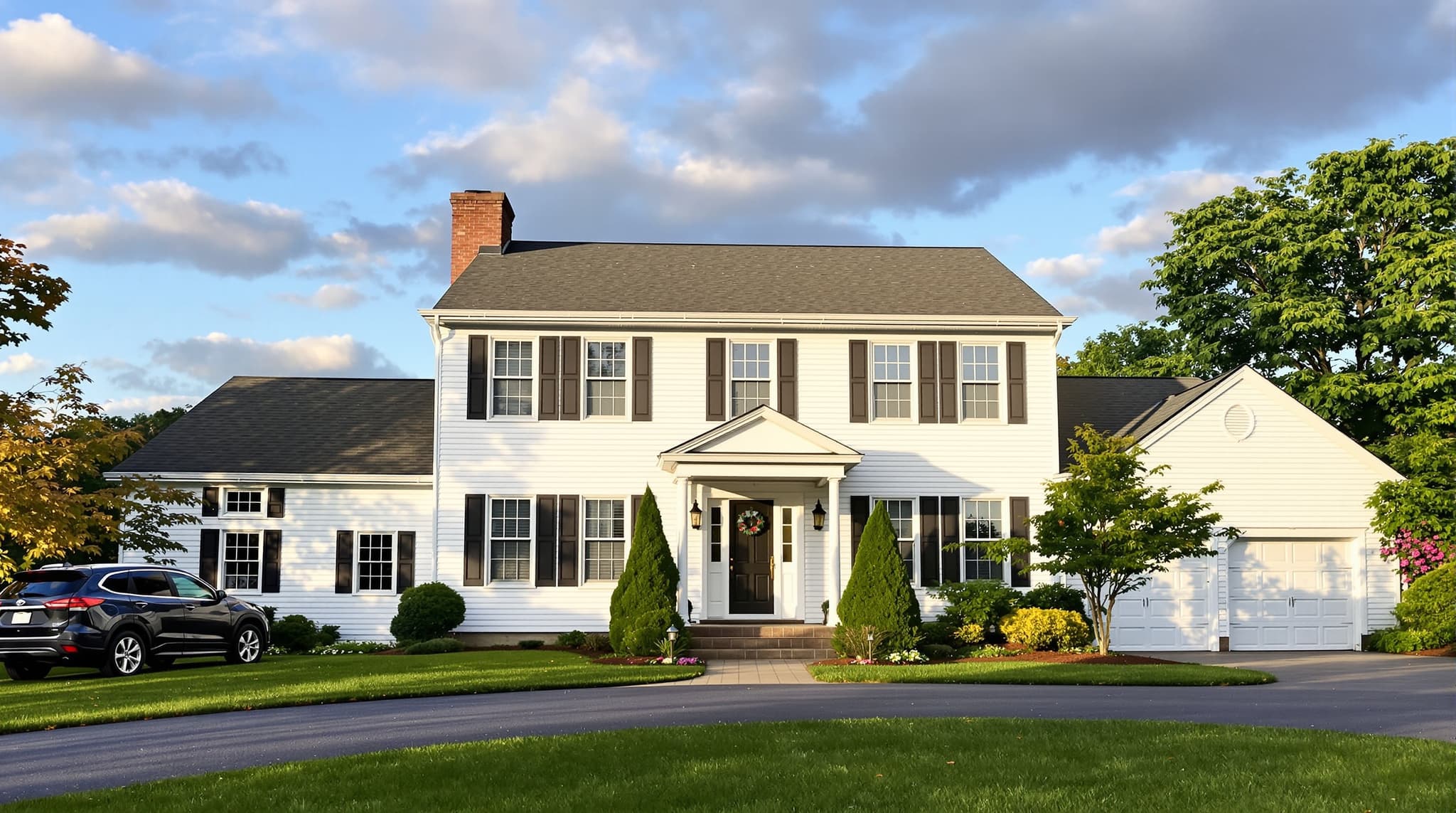
Why Cedar Belongs on Certain Long Island Homes
Not every Long Island house should wear cedar. A 1960s Hi-Ranch in Levittown is going to look strange in cedar shake, and a vinyl-built tract colonial looks overdressed. But there are LI homes that were practically designed for cedar, and nothing else looks right on them:
Shingle-style homes on the North Shore. The grand old shingle houses in Oyster Bay, Cold Spring Harbor, Sands Point, and Lloyd Harbor. Most of these were originally cedar and most of them still want cedar on the reside.
Coastal Cape Cods. Capes in Bay Shore, Southampton, Remsenburg, Westhampton. Cedar and the ocean are a visual pair that goes back 300 years.
Historic district homes. Garden City, Manhasset, Old Westbury, Port Jefferson. Many of these districts require cedar or cedar-look siding by covenant, and we handle the HARB review paperwork.
Classic 1920s-1940s center-hall colonials. Any pre-war Nassau or Suffolk colonial with the original eaves, casement windows, and real trim details. Cedar is what the architect expected.
If your house is one of the above, read on. If it is a 1970s raised ranch, cedar will still look great but we will be honest with you: vinyl or Hardie probably makes more sense for the budget and the look you are going for.
Real Western Red Cedar vs Engineered Cedar
We install both. Here is the honest difference, with no brand bias.
Real Western Red Cedar
What it is: Solid cedar shakes or shingles cut from Western Red Cedar trees (mostly BC and Washington state). Individually hand-split (shakes) or sawn (shingles). Natural tannins give it fungal resistance and a signature cedar smell.
Pros:
- Authentic patina that silvers beautifully over time if you let it
- Can be stained or sealed in any color, or left natural to weather
- Adds R-value (cedar has R-0.9 per inch)
- Highest resale value impact of any siding material on LI
- Fixable one piece at a time (you can replace a single shake)
- The real thing
Cons:
- Needs staining or sealing every 5-7 years to hold its color
- Vulnerable to carpenter bees, woodpeckers, and mold if not maintained
- More expensive than any alternative ($38,000 to $72,000 for a 2,000 sqft exterior)
- Longer install timeline (10-15 working days minimum)
- Weight and handling require an experienced crew
Best for: Historic homes, shingle-style architecture, coastal homes, homeowners who genuinely want the real thing and understand the upkeep
Brands we install: Certi-Split shakes, Certi-Label shingles (both Western Red Cedar Shingle & Shake Bureau certified)
Engineered Cedar (Maibec, Maxitile)
What it is: A manufactured cedar-look product. Maibec is real Eastern White Cedar factory-stained in controlled conditions and warrantied for 15-25 years against the stain failing. Maxitile is a fiber cement shake that looks like cedar from the street but will not rot or feed bugs.
Pros:
- Maibec: half the maintenance of real cedar, factory stain lasts 15+ years
- Maxitile: zero maintenance, same fire resistance as James Hardie
- Consistent color (no wild variance between bundles)
- Much faster install
- Warrantied color
- About 65-80% of the cost of real Western Red Cedar
Cons:
- Maibec still needs touch-ups after 15 years
- Maxitile is not actually wood (purists notice)
- Fewer color choices than real cedar
- Cannot be stained a custom color on site
Best for: Homeowners who want the cedar look without the upkeep, anyone with sun-exposed walls that would destroy real cedar, owners of homes that are not historic
Brands we install: Maibec Eastern White Cedar (factory-stained), Maxitile Traditional Cedar Shake
Cedar Shake Pricing for Long Island Homes
All numbers are for a 2,000 square foot exterior including full tear-off, house wrap, flashing, new soffit and fascia, permit fees, disposal, and our 10-year workmanship warranty.
| Package | Price Range | |---|---| | Maxitile fiber cement shake (full exterior) | $28,000 - $42,000 | | Maibec engineered cedar (full exterior) | $34,000 - $52,000 | | Real Western Red Cedar shingles (full exterior) | $44,000 - $62,000 | | Real Western Red Cedar hand-split shakes (full exterior) | $52,000 - $72,000 | | Cedar gable accent over vinyl or Hardie body | $4,500 - $9,000 (accent only) | | Cedar gable accent + HardiePlank body | $38,000 - $54,000 (full job) |
Factors that move the number:
- Real vs engineered. Real cedar is about 30-40% more than engineered.
- Shingles vs shakes. Hand-split shakes are more expensive than sawn shingles and take longer to install.
- Stain grade and application. Factory stain (Maibec) is included in the price. On-site staining adds $3 to $6 per square foot depending on coats.
- Historic district approval. Some Nassau and Suffolk historic districts require specific cedar grades and colors. We handle the paperwork, which adds a week or two to the timeline but no line-item cost.
Why We Recommend Maibec to Most Cedar Shoppers
Maibec is a Quebec-based manufacturer that takes Eastern White Cedar shingles and factory-stains them in a controlled facility before they ship. The stain penetrates deeper than anything we can apply on site, and it carries a 15-year warranty on the color and a 25-year warranty on the substrate.
Why we like it for most of our cedar customers:
- Half the maintenance. Real cedar needs a stain refresh every 5-7 years. Maibec holds its color for 15+ years.
- Consistent color across the house. Real cedar bundles can vary significantly in tone. Maibec is consistent bundle-to-bundle.
- Wide color palette. 80+ stain colors, including weathered gray tones that look like naturally silvered cedar on day one.
- Made in North America. Shipping from Quebec is faster than shipping real cedar from BC.
- Price. About 65-70% of the cost of real Western Red Cedar for 90% of the aesthetic.
For the homeowner who says "I want cedar but I do not want to restain the house every 5 years", Maibec is the answer. We have installed it on 40-plus Long Island homes since 2018 and we have not had a warranty issue yet.
How Cedar Installs Fail (and What We Do Instead)
Cedar is the most install-sensitive siding we work with. Get it wrong and it rots in 5 years. Get it right and it lasts 30. Here are the four most common failure modes we see when we are called in to repair other crews' cedar jobs.
Failure 1: No breathable underlayment. Cedar needs to breathe. If the installer uses a solid waterproof membrane (regular Tyvek with no drainage) the cedar traps moisture against the back face and rots from the inside. Cedar needs a drainable underlayment like TYVEK DrainWrap or a rainscreen furring system. We spec it on every cedar job.
Failure 2: Face-nailing instead of blind-nailing. Shingles should be blind-nailed so the nail heads are covered by the next course. When a crew face-nails them, the exposed nail heads become water entry points and the nails rust and stain the cedar. We blind-nail every shingle.
Failure 3: No stain on the back and edges. Factory-stained Maibec comes pre-stained on all six sides for a reason. Real cedar that ships raw needs to be back-primed or back-stained before install, especially on exposed walls. Skipping this is the most common reason real cedar fails prematurely. We back-prime every piece of raw cedar we install.
Failure 4: Wrong exposure spacing. Cedar shingles have a rated exposure (typically 5" to 7.5" depending on the shingle length). Crews that cheat the exposure to use fewer bundles end up with undersized overlap and water getting behind the courses. We install to the rated exposure always.
What a Cedar Project Actually Looks Like
Day 0: Free estimate. We walk the house, take photos, measure. Cedar estimates take longer than vinyl because we have to discuss real vs engineered, stain color, exposure, and maintenance expectations.
Day 0-21: Contract, material order. Maibec and Maxitile ship in 10-14 days. Real Western Red Cedar can take 3-6 weeks depending on the grade and the mill.
Day 1-2: Setup, tear-off, sheathing inspection.
Day 2-3: DrainWrap installation, flashing upgrade, window and door trim prep.
Day 3-12: Cedar install, course by course, blind-nailed, properly staggered, backed with starter strips at every row.
Day 12-14: Trim work, corner boards, fascia, soffit.
Day 14-15: Punch list, final stain touch-ups if needed, cleanup.
Typical timeline: 10 to 15 working days for engineered cedar, 12 to 18 days for real cedar. Longer in historic districts where we have scheduled inspections.
What Cedar Actually Requires From You After We Leave
Cedar is not a set-and-forget material. Here is the real maintenance schedule depending on which cedar you picked.
Real Western Red Cedar
- Year 0: Just installed, clear or stained to your preference
- Year 1: Quick wash with mildew-killing cleaner
- Year 2-4: Annual hose-down, inspect for any shakes starting to cup or check
- Year 5-7: First stain refresh. Plan on $4,000 to $9,000 for a professional stain job on a 2,000 sqft exterior
- Year 8-14: Annual maintenance continues. Watch for any shingle replacement needed
- Year 14-16: Second stain refresh
- Year 20-30: Natural end of life if maintained. Individual shake replacement as needed.
Maibec Engineered Cedar
- Year 0: Just installed, factory-stained
- Year 1-10: Annual hose-down. Nothing else.
- Year 10-15: Inspect for any color touch-ups. Most walls need none.
- Year 15+: First potential stain refresh, much lighter than real cedar
- Year 25-30: Useful life end
Maxitile Fiber Cement Shake
- Year 0 to 15: Annual hose-down. Nothing else. Ever.
- Year 15: Optional repaint with exterior acrylic if you want a color change
- Year 30-40: Still on the house
We include a maintenance guide in the warranty folder for every cedar job. If you hire us for the reside, we will come back and do your first maintenance inspection free in year 5.