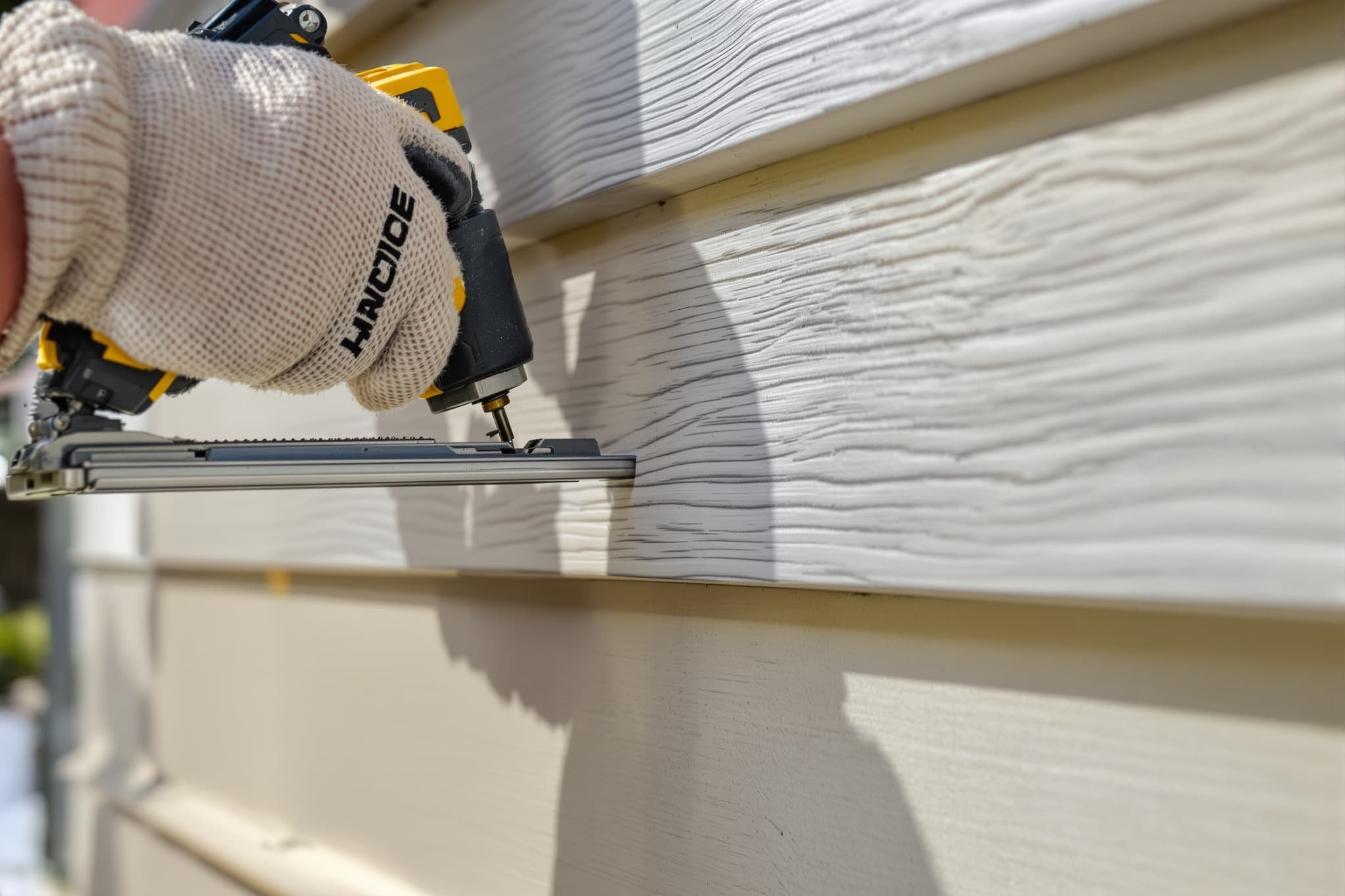
What James Hardie Is, in Plain English
Hardie is fiber cement. That means it is a board made from Portland cement, sand, cellulose fiber, and water, pressed into siding planks and baked. It is not wood. It is not vinyl. It is, for all practical purposes, a thin sheet of stone with a factory-baked finish on it.
Here is what that actually means if you own a Long Island home:
It does not burn. A James Hardie plank meets ASTM E136 for non-combustibility. If a neighbor's barbecue topples over onto your wall, or an ember from a chimney lands on your siding, you are not going to lose the house. Vinyl melts at about 165 degrees Fahrenheit. Hardie is rated to 1,800.
It does not rot. The two most common siding failures on LI homes are water getting behind the J-channel and staying there, and carpenter bees chewing through cedar. Hardie has no organic material in it for mold to eat or bees to chew, so neither of those failure modes happens.
Woodpeckers leave it alone. If you have ever had a red-bellied woodpecker drumming on your cedar gable at 6am in May, you know why this matters. They try Hardie once and never come back.
It holds its color. The Hardie ColorPlus Technology finish is a multi-coat factory paint system baked onto the board. It carries a 15-year non-prorated warranty, and unlike asphalt shingles where "30 year warranty" means "prorated to 14% of the replacement cost", the Hardie finish warranty is actually honored. We have filed claims. They paid them.
It is heavy. One James Hardie plank weighs about 2.5 pounds per square foot, compared to 0.5 for vinyl. This is a good thing when a nor'easter is pushing 60 mph wind against your east wall. It is a bad thing for a crew that does not know how to handle it. More on that below.
Why Hardie Matters on a Long Island Home
Three Long Island realities make Hardie a particularly good fit here:
Salt air. If your house is within a mile of the LI Sound or the Atlantic, salt air is slowly destroying everything metal and fading everything vinyl. Hardie's ColorPlus finish is salt-spray tested to 2,000 hours in accelerated aging. We have Hardie installations from 2017 in Long Beach, Bay Shore, and Oyster Bay that still look like the day we finished them.
Hurricane wind zones. Most of Long Island sits in a 120 mph to 140 mph basic wind zone for building code. Hardie is wind-rated to 150 mph when fastened per their installation spec. Vinyl is rated to 110 mph and starts flapping at 80. In a Sandy-scale event, we would bet on Hardie every time.
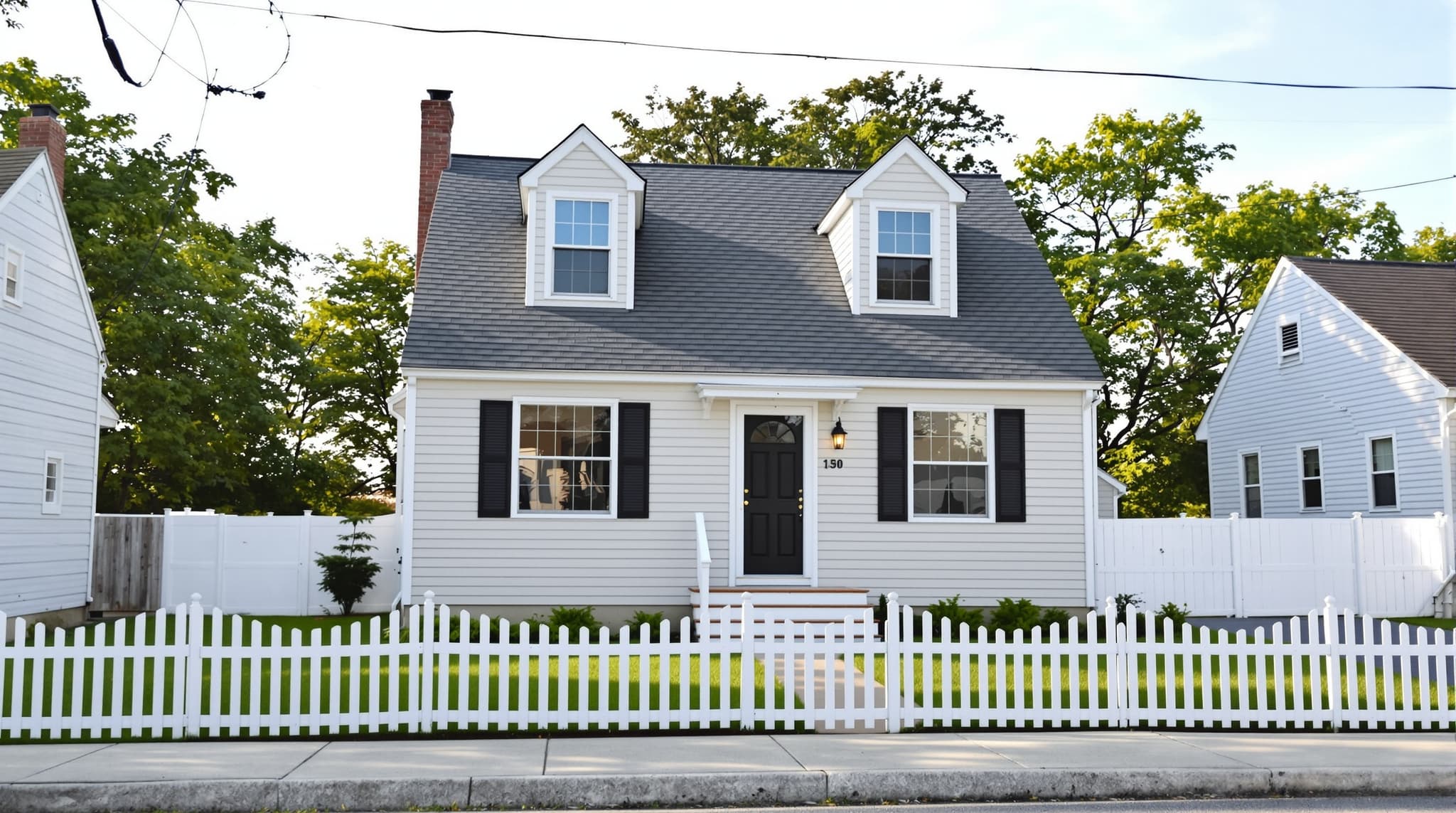
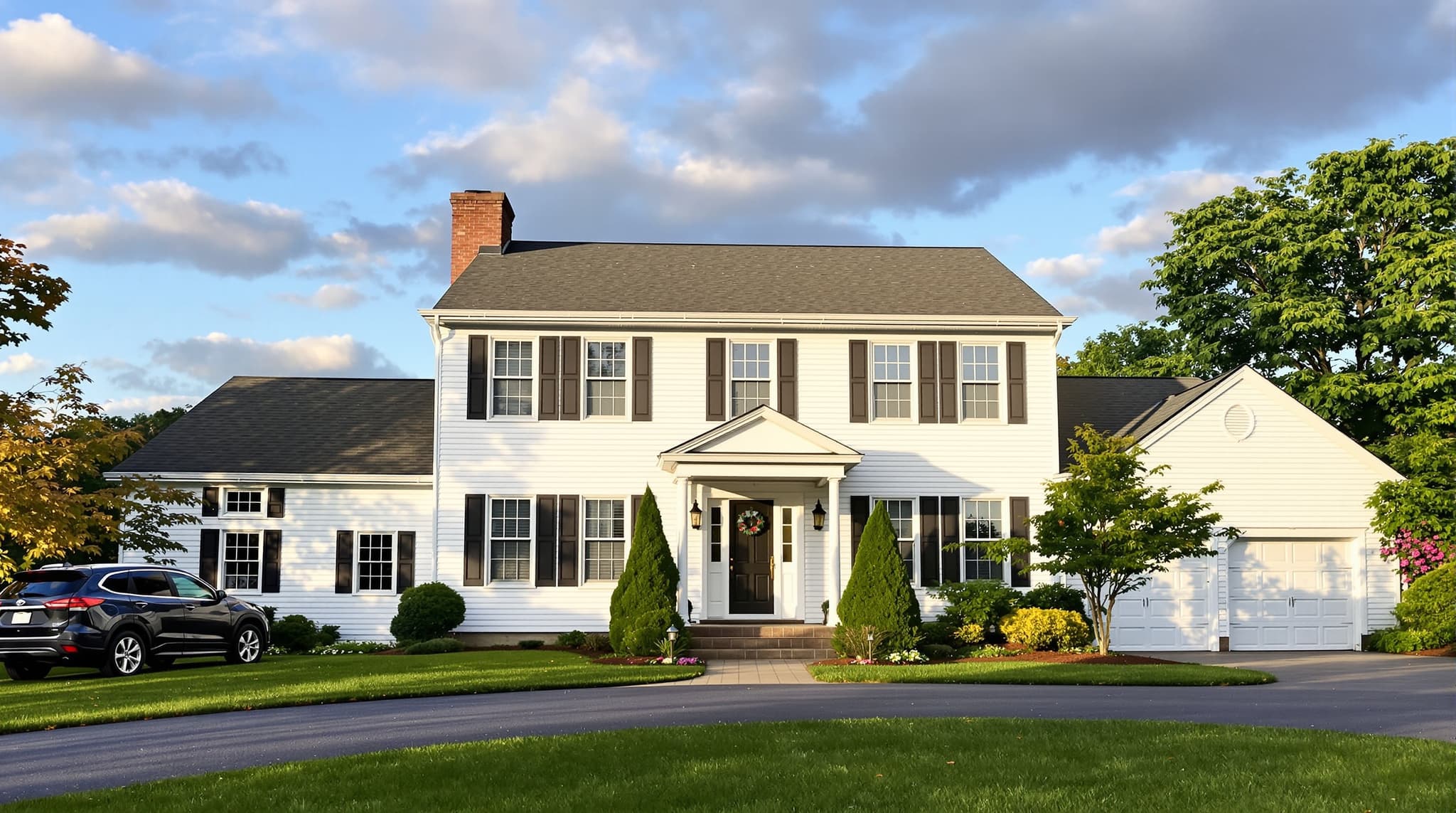
Architectural fit. LI has three house styles that Hardie was practically designed for: center-hall Colonials, shingle-style Capes, and Hi-Ranches with a lot of trim. Hardie Plank lap siding on a Colonial looks like traditional clapboard, which is what the house was originally built to wear. Hardie Shingle panels on a Cape look like cedar shake without the upkeep. The HardieTrim boards around windows and corners give the house a substantial line that vinyl cannot fake.
90+ Hardie Installs Since 2017
We became a James Hardie Preferred Contractor in 2017. That took a factory-led training, a portfolio review, and a workmanship inspection on our first three jobs. It is not a logo we bought. It is a certification that Hardie can pull if we do sloppy work.
Since then we have installed Hardie on:
- 32 Colonials across Nassau and Suffolk
- 18 Cape Cods (mostly Massapequa, Levittown, Bethpage)
- 14 Hi-Ranches and Split Levels
- 11 Raised Ranches
- 9 Shingle-style custom homes on the North Shore
- 6 specialty residences in Garden City and Manhasset historic districts
- 2 commercial storefronts that were owner-occupied and asked nicely
Across all of those, we have had zero warranty claims against the Hardie finish and one workmanship claim (a soffit gap in year two of a 2019 install), which we corrected on our own dime the next morning.
Image grid: 6 before/after pairs from `brand/portfolio/` tagged "hardie".
Real James Hardie Prices for Long Island Homes
Here is the honest math. These numbers are for a 2,000 square foot exterior (a typical 4-bedroom Colonial or Hi-Ranch), including tear-off of old siding, house wrap, new Hardie Plank, HardieTrim, new flashings, standard soffit and fascia, permit fees, disposal, and a 10-year workmanship warranty.
| Scope | Price Range | |---|---| | Hardie Plank, standard ColorPlus color, lap siding only | $32,000 - $44,000 | | Hardie Plank + HardieShingle accent gables | $38,000 - $52,000 | | Hardie Plank + HardieTrim + board and batten accent | $42,000 - $58,000 | | Full Hardie with Aspyre Collection (Artisan or Reveal) | $52,000 - $78,000 |
Factors that move the number:
- Tear-off complexity. Asbestos shingle underlayment (common pre-1978) adds $3,500 to $6,500 in abatement. Aluminum tear-off is easier and cheaper.
- Stories. A 2.5-story colonial with attic dormers adds scaffolding cost.
- Custom colors. Hardie ColorPlus comes in 20 standard colors. Custom matches add about 8 to 12 percent.
- Trim detail. If you want 6" vs 4" corner boards, that is a material upcharge, not a labor one.
We never raise the price after the contract is signed. If we missed something on the walkthrough, that is our problem, not yours.
Where Other Crews Mess Up Hardie (and What We Do Instead)
Hardie is unforgiving. The material is great, but it has specific install requirements that a general carpentry crew will skip without knowing why. Here are the four most common failure modes we have seen on LI jobs we were called in to repair after someone else installed Hardie badly.
Failure 1: Exposed cut edges not sealed. Every cut edge of a Hardie plank needs to be primed and painted. Otherwise water wicks into the exposed fiber-cement and the board delaminates from the back. We carry a quart of ColorPlus-matched touch-up paint on every job specifically for cut ends. It adds about 20 minutes per wall. Most crews skip it because it is boring.
Failure 2: Wrong fastener, wrong depth. Hardie specifies either 6d common nails blind-nailed, or 4d galvanized or stainless siding nails face-nailed, both driven flush but not over-driven. Drive it 1/16" too deep and the board cracks along the grain in year three. We run pneumatic guns with depth-of-drive set specifically for the plank thickness we are using. We check it every morning before the crew starts.
Failure 3: No kickout flashing at roof-to-wall junctions. This is the single biggest cause of water damage behind siding on LI. Where a roofline ends next to a wall (like above a porch or a bump-out), you need a kickout diverter that directs water into the gutter instead of behind the siding. James Hardie's install spec requires it. Most crews "forget". We install kickouts on every single roof-wall junction, no exceptions.
Failure 4: Improper gap at butt joints. Hardie expands and contracts less than vinyl, but it still moves. The spec calls for a 1/8" gap at butt joints backed with flashing tape. Crews that hammer boards tight together end up with cracked boards by year four. We cut to spec.
The Full Hardie Lineup We Install
- HardiePlank Lap Siding — traditional horizontal lap. Most common. Comes in 5.25", 6.25", 7.25", 8.25" exposure.
- HardieShingle Siding — straight-edge shingle panels that mimic cedar shake. Great for gables and accent walls.
- HardiePanel Vertical Siding — 4'x8' or 4'x10' panels, used for board-and-batten looks with battens applied on top.
- HardieTrim Boards — 3.5", 5.5", 7.25" for corners, window casing, fascia.
- HardieSoffit Panels — vented and non-vented, pre-primed or ColorPlus.
- Artisan by James Hardie — premium line, thicker plank, deeper shadow line, more colors. Runs about 20% more than standard Hardie Plank.
- Hardie Reveal — modern flush-panel look for contemporary homes.
ColorPlus palette: 20 standard colors including Arctic White, Navajo Beige, Khaki Brown, Pearl Gray, Aged Pewter, Iron Gray, Evening Blue, Heathered Moss, Monterey Taupe, Woodland Cream, and all the classic Hardie whites. We bring the real color samples to every estimate, not printed chips.
What the Hardie Project Actually Looks Like
Day 0 — Free estimate. Ryan or Mike comes out, measures the house with a laser, takes photos of trouble spots, asks about timeline. About 30 minutes. You get a written quote within 48 hours with line items for material, labor, trim, permits, and disposal.
Day 0 to 14 — Contract and ordering. Once you sign, we order the Hardie, HardieTrim, fasteners, and accessories. Hardie usually ships to our Hicksville yard in 7 to 10 business days. If you need a custom color, add 2 weeks.
Day 1 on site — Setup. We drop the dumpster, set scaffolding, tarp the shrubs, protect the walkways, and notify your neighbors with a door-hanger about the upcoming noise.
Day 2-4 — Tear-off. Old siding and old house wrap come off. We document every water-damaged sheathing board we find and send you photos before we cover anything up.
Day 4-6 — Repairs and house wrap. Rotted sheathing gets replaced. New TYVEK DrainWrap goes on. Flashings get installed around every window, door, and penetration.
Day 6-14 — Hardie install. Plank goes on bottom-up with proper flush fastening, butt joints at the stud locations, and color-matched touch-up on every cut edge. HardieTrim wraps the corners, windows, and fascia.
Day 14-18 — Caulk, paint touch-ups, final details. Every j-channel and trim joint gets sealed with Hardie-approved sealant. Any field cuts get painted. The porch columns get reattached if they came off.
Day 18 — Punchlist and cleanup. Mike walks the house with you. You point at anything that bothers you. We fix it before we leave. We magnet-sweep the yard twice, empty the dumpster, and send you the warranty registration paperwork.
Total timeline: 12 to 18 working days for a typical 2,000 sqft exterior. Weather permitting. We do not install Hardie below 40 degrees because the sealants do not cure properly.
What's Warrantied (and By Whom)
| Item | Warranty | Backed By | |---|---|---| | Hardie plank substrate | 30 years, non-prorated | James Hardie | | ColorPlus Technology finish | 15 years, non-prorated | James Hardie | | HardieTrim boards | 15 years | James Hardie | | Our workmanship (install, flashing, fasteners) | 10 years | Long Island Siding Co. | | Caulking and sealants | 2 years touch-up, 10 years material | Product manufacturer + us |
If something fails in year 8 because we drove a nail wrong, we come back and fix it free. If something fails because a tree fell on the house, that is an insurance claim and we will help you file it.